|
|
| |
 |
|
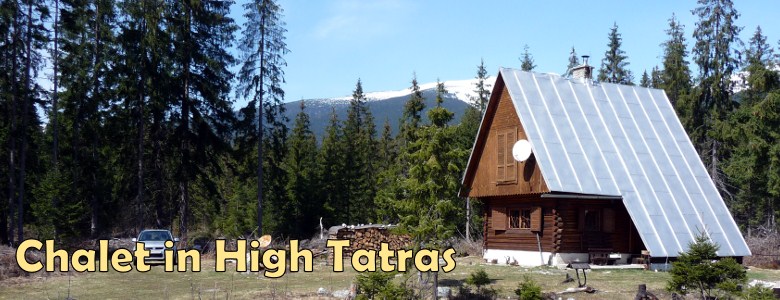
Chalet under Bystra
Culture
|
Museum of Liptov Village in Pribylina (6 km)
Documentation of folk architecture in the villages of upper and lower Liptov, animal husbandry of some original Carpathian breeds of livestock (hucul horse breeding with a possibility of riding available to the visitors). Reconstruction of the village with its wooden church, cemetery, marketplace, outbuildings and residential buildings, presenting the way of life in the 19th century and at the beginning of the 20th century. The museum was established in connection with the construction of the Liptovská Mara water damn in order to preserve the most precious folk monuments of the flooded villages. The most valuable architectural monuments of the flooded region can be found here – the early gothic Church of the Virgin Mary, the gothic-renaissance chateau from Parížovce – the oldest yeoman seat, objects of wooden architecture, etc.
Events: Podroháče Cultural Fest, demonstration of authentic folklore and traditional regional folk handicraft.
More: www.zapadnetatry.com/ciele/mldediny/mldediny.html
|
Open-air museum - Vlkolinec(70 km)
Biely Potok is the salient point for the community of VLKOLÍNEC - a monument reserve of folk architecture. This extraordinary and remarkable oasis of folk architecture was included in the List of the World Cultural and Nature Heritage of UNESCO in 1993.
The community was first referred to in 1376. Its unique compound of original folk buildings remained untouched by modern construction. Based in comparative study of ICOMOS (International Council for Monuments and Settlements) it was classified as the best-reserved settlement of this time within the Carpathian Arch. Originally it was the settlement of loggers, shepherds and farmers.
Vlkolínec is a typical example of a two-line street pattern with long yards. In its centre, the community divides into a street leading to the Baroque-Classicist Roman-Catholic church of the Virgin Marys Visitation of 1875 and a street heading along a steeper terrain to the foothills of the Sidorovo Mountain (1,099 m).
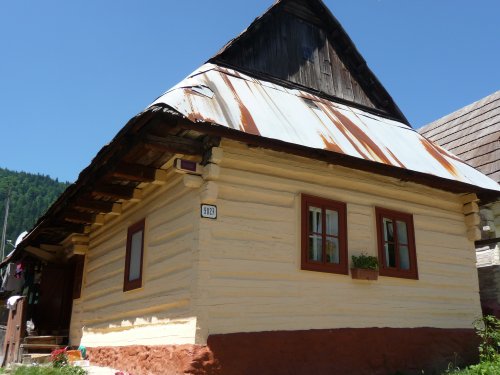
At the division of the streets the two most frequently photographed objects stand - a log two-storey belfry from 1770 on a stone stand and a log well from 1860. Among the protected buildings in the community are 45 log houses with farmyards from the 18th century. The interesting thing is that it was painted in blue, rose and white paints twice a year.
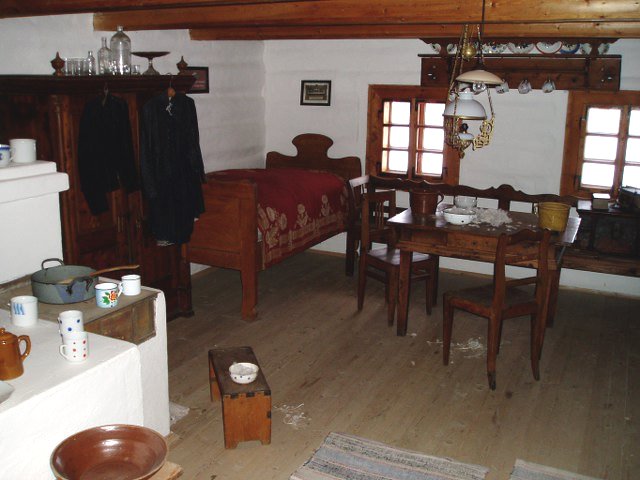
A typical example of a house in Vlkolínec is the farmers' house - a detached outdoor part of the expositions of the Liptov Museum. The house was built in 1886 and opened to public in 1991. Its well-preserved original interior and furniture provide a true picture of the way of life of its ancient inhabitants from the end of the 19th and beginning of the 20th century. The remaining protected objects in the monument reserve are still inhabited, its population amounts to 30 and this is the reason why visitors can see only the exterior of houses.
Vlkolínec is included in the National Park of Veľká Fatra. The cyclist route crosses it and owners of several private houses offer accommodation. The interesting folk event called “Sunday in Vlkolínec” is organised every summer at the beginning of August.
More: www.nizketatry.sk/obce/vlkolinec/vlkolinec.html
|
Articular wooden church in Svaty Kriz (35 km)
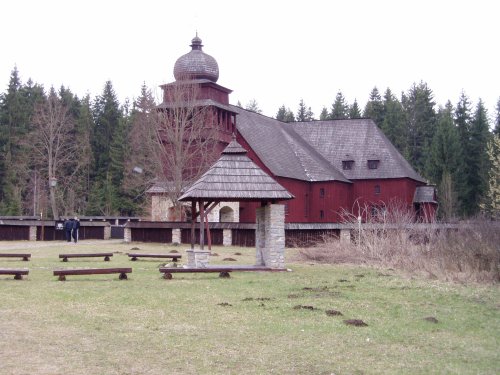
This evangelical articular wooden church built by Master Jozef Lang dates back to 1729. It is one of the largest wooden constructions in Slovakia and all of Central Europe. It is located in the municipality of Svätý Kríž in the Central Liptov region. It was transferred here from the municipality of Paludza after its flooding as a result of the construction of the Liptovská Mara dam. It has a cross-like ground plan with a two-story pulpit. The paintings with plant and figural motifs decorating the ceiling and choir loft of the church depict costumes of peasants, townsmen and nobility from the 17th and 18th centuries.
More: www.nizketatry.sk/obce/skriz/skriz.html
|
Open-air museum - Celtic settlement Havranok
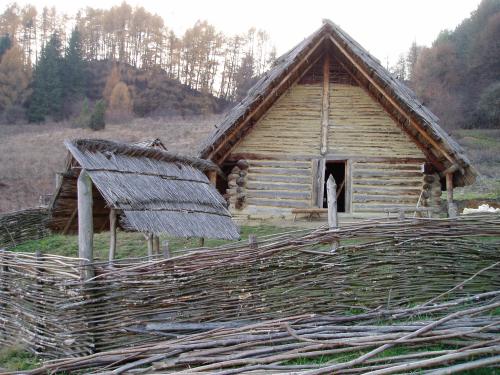
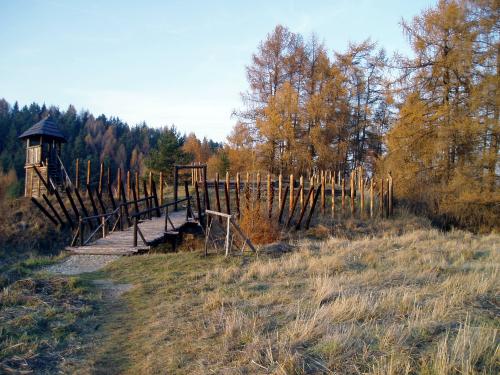
Havránok is an important archaeological site in northern Slovakia. It is located on a hill above the Liptovská Mara water reservoir around 2 km from the village of Bobrovník, about halfway between Ružomberok and Liptovský Mikuláš in the Liptov region. The archaeologists unearthed a prehistoric Celtic hill fort and a medieval wooden castle in the 1960s, during the construction of the Liptovská Mara dam. Both objects have been partially reconstructed. During the Iron Age and the Roman Era, the shrine of Havránok was an important religious center of the Celts living in Slovakia.
The Havránok hill fort was an important religious, economic, and political center of the Púchov culture (300 BCE - 180 CE), in which the dominant Celtic tribe of Cotini mingled with the older people of the Lusatian culture. The prosperous oppidum was destroyed along with other Celtic settlements in Slovakia around the beginning of the Common Era either by the Germanic tribe of Quadi or by Dacians.
A medieval wooden castle existed near the remnants of the ancient hill fort from the 11th to 15th century CE.
|
|
|